Pre-Congress Workshop · IFAC 2026 World Congress

GPU Acceleration in Optimization and Optimal Control

A half-day workshop on GPU-accelerated nonlinear optimization and optimal control.

Sunday, 23 August 2026 · BEXCO, Busan, Republic of Korea

About the Workshop

Optimal control is a fundamental problem in control theory and systems engineering, with applications across process control, autonomous systems, and energy systems. As these applications grow in complexity, the underlying optimization problems become increasingly large-scale and computationally demanding, and traditional CPU-based solvers often struggle to meet real-time requirements.

While GPUs are best known today as the workhorse of large-scale AI model training, the same hardware is highly effective for the numerical computations at the heart of control — and its usefulness extends well beyond training neural-network policies. Modern GPUs deliver an order of magnitude more arithmetic throughput and memory bandwidth than CPUs, and recent advances now make it possible to bring this performance to bear on the structured nonlinear programs that arise in optimal control. By exploiting the repeated structure induced by time-discretized dynamics, GPU-accelerated interior-point methods can solve problems faster, scale to far larger horizons and state dimensions than CPU-based solvers, and open the door to real-time control of systems that were previously out of reach. This workshop bridges the gap between these algorithmic advances and the practitioner, providing both the theoretical understanding and the hands-on skills to formulate and solve large-scale problems efficiently on modern GPU architectures.

Format: Half-day (3.5 hours, including a coffee break). About 2 hours of lectures on theoretical foundations and algorithms, followed by about 1.5 hours of hands-on tutorials with interactive notebooks.

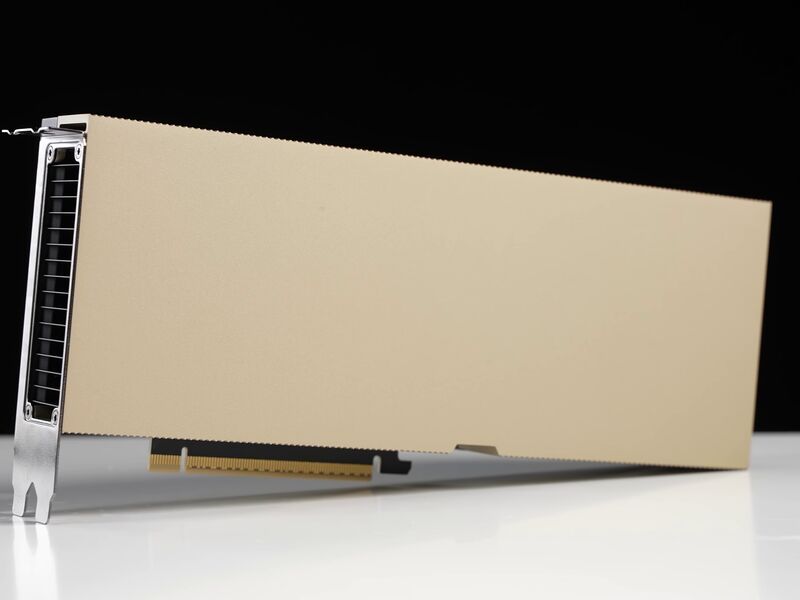
NVIDIA H100 GPU
GPU computing
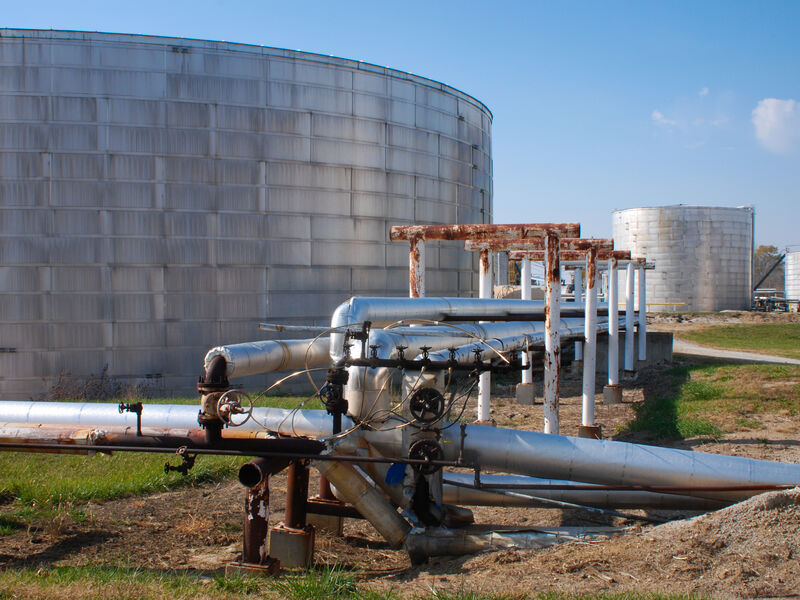
Chemical process plant
Process control
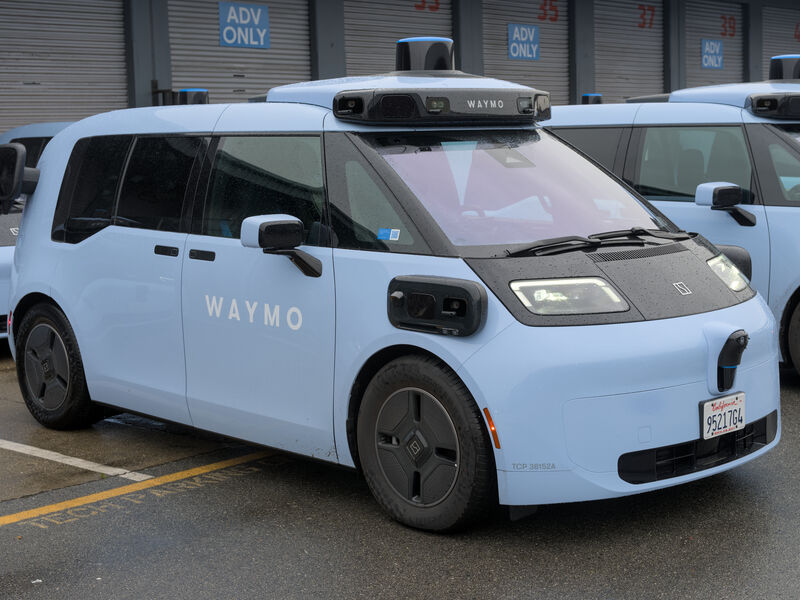
Autonomous vehicle
Autonomous systems
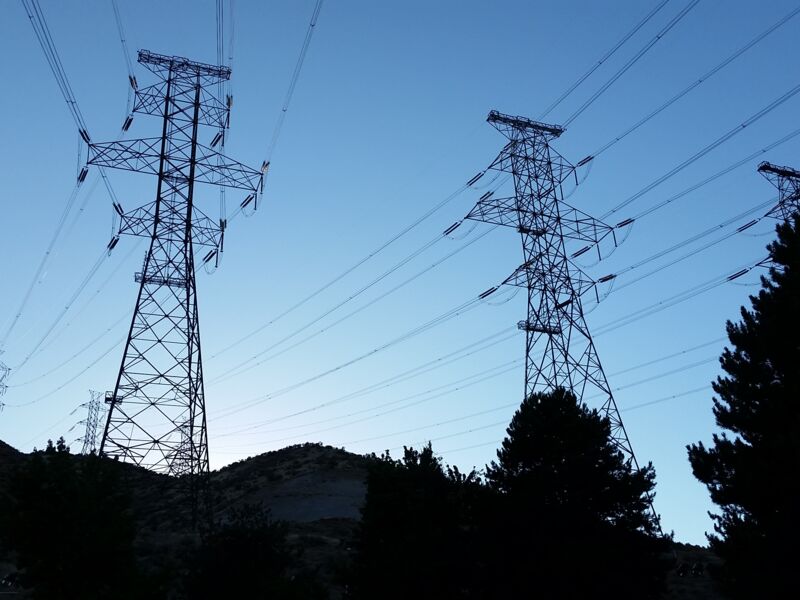
High-voltage transmission lines
Power grid

Organizer

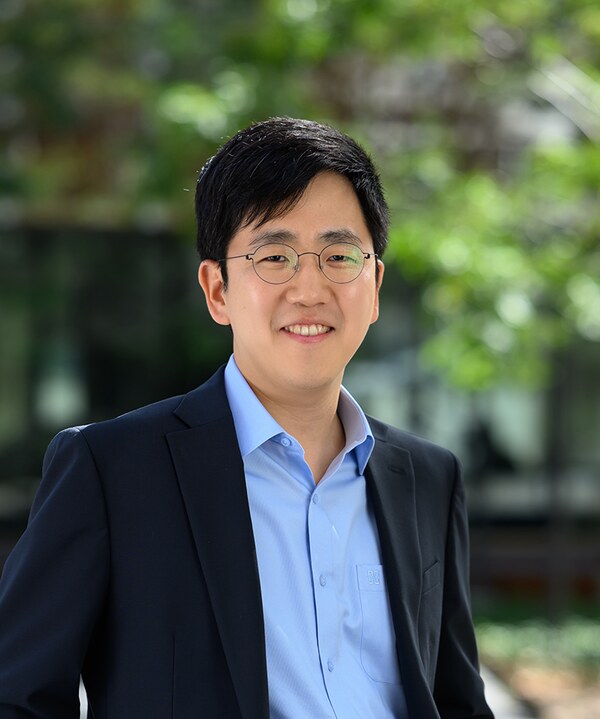
Sungho Shin

Sungho Shin

Texaco–Mangelsdorf Career Development Chair Assistant Professor
Department of Chemical Engineering, Massachusetts Institute of Technology

Sungho Shin works on GPU-accelerated nonlinear optimization for large-scale optimal control. He is the lead developer of MadNLP.jl, a GPU-accelerated interior-point solver for nonlinear programming, and ExaModels.jl, an algebraic modeling and automatic differentiation tool for GPUs. His group's recent work shows that GPU-resident interior-point methods can deliver order-of-magnitude speedups on optimal-control-style nonlinear programs that arise in process control, autonomous systems, and power-grid operations.

The MadNLP and ExaModels team received the COIN-OR Cup (2023) for outstanding contributions to open-source operations research software, and the group's work on AC optimal power flow on GPUs was highlighted on the NVIDIA technical blog (2024).

Web: shin.mit.edu  ·  Email: sushin@mit.edu  ·  Google Scholar  ·  GitHub

Topics & Audience

Part 1 — Foundations & algorithms

Introduction to nonlinear optimization and software tools. Fundamentals, building toward optimization formulations of optimal control:

Recent advances in GPU-accelerated optimization. What's new and what makes it work on the GPU:

Part 2 — Hands-on tutorials

GPU computing in the Julia language. Implementing GPU code from the basics:

Formulating and solving nonlinear optimal control problems on GPUs. Using the MadSuite tooling:

Extensions: parameter estimation and energy systems. More involved examples that build on the same modeling and solver stack:

Example applications are drawn from nonlinear model predictive control in process control, autonomous systems, and energy systems. A similar tutorial — focused on power systems — was offered at PowerTech 2025; the IFAC 2026 edition retargets the material to optimal control.

Audience & outcomes

The workshop targets researchers and practitioners in control, optimization, and systems engineering, as well as graduate students and postdocs working on optimal control and model predictive control. It is also relevant to anyone interested in high-performance computing for control in process control, autonomous systems, and energy systems.

By the end of the workshop, participants will be able to:

Prerequisites

Schedule & Logistics

Date
Sunday, 23 August 2026 (pre-congress day, immediately preceding the IFAC World Congress on 24–28 August 2026).
Venue
BEXCO, Busan, Republic of Korea — in conjunction with the 23rd IFAC World Congress.
Duration
Half day (3.5 hours).
Language
English.
What to bring
A laptop with a modern web browser. Hands-on examples will be provided as notebooks and can be run on a hosted environment; local installation instructions for Julia, ExaModels.jl, and MadNLP.jl will be made available before the workshop. Access to a GPU is not required — a shared GPU environment will be provided for the live exercises.
Materials
Lecture slides, notebooks, and example code will be linked from this page and from a public repository in advance of the workshop.
Registration
Handled through the IFAC 2026 World Congress system. The workshop is part of the pre-congress workshops program and is available to regular congress registrants (Full, Student, One-day Industry, or Retiree). Early-bird deadlines will be announced on this page.
Code of conduct
Participants are expected to follow the IFAC Code of Ethics and Conduct.
Contact
For questions about workshop content, contact sushin@mit.edu.

Tentative Schedule

All times in Korea Standard Time (KST, UTC+9). Workshop runs 08:30–12:00.

Time (KST)Session
08:30–08:35Logistics
08:35–09:25Introduction to nonlinear optimization and software tools
09:25–09:30Short break
09:30–10:20Recent advances in GPU-accelerated optimization
10:20–10:40Morning coffee break (fixed)
10:40–11:05GPU computing in the Julia language interactive
11:05–11:30Formulating and solving nonlinear optimal control problems on GPUs interactive
11:30–11:55Extensions: parameter estimation and energy systems interactive
11:55–12:00Closing

Software & Papers

Software stack

The workshop is built on the following foundational stack:

On top of this stack, the hands-on portion uses two packages from MadSuite, an open-source optimization software suite for GPUs developed and maintained by the organizer:

Selected papers

The workshop draws on the following papers, which together cover the algorithmic foundations and software design of GPU-accelerated nonlinear optimization. A more complete list is available on the organizer's publications page.